The Most Effective Warm-Up Exercises for Basic Piano Lessons
Warm-up exercises are an essential part of every piano lesson, whether you are a complete beginner or have some experience. They prepare your fingers, hands, and mind for playing, improve your technique, and reduce the risk of strain or injury. In basic piano lessons, the right warm-up exercises can make a significant difference in how quickly a student progresses. This article explores the most effective warm-up exercises that every beginner should incorporate into their practice routine, while also highlighting resources like https://piano-nord.com/ for structured guidance.
Why Warm-Up Exercises Are Important
Warm-ups do more than just loosen your fingers. They improve finger independence, hand coordination, and overall dexterity. When practiced consistently, warm-ups help build muscle memory, making it easier to play scales, chords, and simple melodies. Additionally, warm-ups promote better posture and hand positioning, which are critical foundations in basic piano lessons.
For beginners, warm-ups are especially crucial because they lay the groundwork for proper technique. Many students underestimate the importance of warming up and jump straight into songs, which can lead to tension, mistakes, and frustration. Using structured warm-ups from resources like https://piano-nord.com/ ensures that practice sessions are productive and enjoyable.
Finger Stretching and Flexibility Exercises
One of the first warm-up exercises in basic piano lessons should focus on finger stretching. Before touching the keys, gently stretch each finger, thumb, and wrist. Simple stretches, such as pulling each finger back individually and rotating wrists in small circles, prepare your hands for playing. These exercises enhance flexibility and reduce stiffness, making finger movements smoother during practice.
Finger independence exercises are also valuable. Begin by placing all five fingers on a single hand on five consecutive keys. Lift and lower each finger individually while keeping the others pressed lightly on the keys. This exercise strengthens finger control and coordination, which is fundamental in basic piano lessons.
Simple Scales and Arpeggios
Playing scales and arpeggios is one of the most effective warm-up techniques for beginners. Start with the C major scale, playing slowly with both hands. Focus on even tempo, smooth transitions, and relaxed wrist movements. Practicing scales not only improves finger strength but also helps in understanding musical keys and patterns, a core element in basic piano lessons.
Arpeggios are another excellent warm-up. Begin with simple triads like C major or G major, playing them in both ascending and descending orders. Arpeggios encourage finger stretching and coordination across multiple keys, which is beneficial for both technique and musicality. Resources like https://piano-nord.com/ provide guided exercises for scales and arpeggios, making it easier for beginners to follow a structured routine.
Hanon Exercises and Finger Drills
Hanon exercises are widely recognized as effective warm-ups for pianists of all levels. For beginners, starting with the first few exercises can significantly enhance finger strength, agility, and evenness. These exercises involve repetitive patterns that target each finger, promoting independence and coordination.
Finger drills are another variation of Hanon-like exercises. For example, play sequences such as 1-2-3-4-5 on each hand, then reverse 5-4-3-2-1. Combine this with alternating hand patterns to challenge coordination further. Consistently practicing finger drills helps develop the precision and speed necessary for more complex pieces in basic piano lessons.
Rhythm and Timing Exercises
A warm-up is not just about fingers; it is also about your musical awareness. Rhythm and timing exercises train your ability to play evenly and with proper timing. Beginners can use a metronome to practice simple rhythms, starting slowly and gradually increasing the tempo.
Clapping exercises are also effective. Before even touching the piano, clap out rhythms from simple songs. This develops a sense of timing and prepares your brain to anticipate beats while playing. Once comfortable, translate these rhythms onto the keyboard using single notes or chords.
Hand Coordination and Independence
One of the most challenging aspects of learning piano is coordinating both hands. Warm-up exercises that focus on hand independence are invaluable. Start by playing simple patterns with the right hand while keeping a steady beat with the left hand, such as playing C in the left hand and a scale in the right.
Another exercise involves playing different rhythms simultaneously in each hand. For example, the right hand can play quarter notes while the left plays half notes. This type of practice improves multitasking and prepares beginners for more advanced pieces.
Simple Chord Progressions
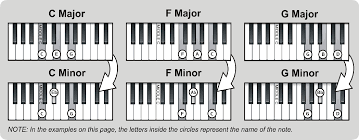
Practicing basic chord progressions as a warm-up helps beginners become familiar with hand shapes and transitions. Start with common triads like C, G, F, and Am, moving smoothly between them. Focus on finger positioning, smooth transitions, and keeping a steady rhythm.
Over time, practicing chord progressions strengthens the hands and develops a natural sense of musical flow. Beginners can use online resources such as https://piano-nord.com/ to access chord charts, diagrams, and exercises tailored to basic piano lessons.
Mindful Breathing and Posture
Warm-ups are also a mental preparation. Mindful breathing before playing relaxes the body and improves focus. Sit with a straight back, shoulders relaxed, and hands gently resting on the keys. Proper posture is critical for preventing tension and facilitating fluid finger movements.
Combining physical and mental preparation sets the tone for an effective practice session. Beginners who take the time to focus on posture and breathing often find they play more efficiently and with greater ease.
Incorporating Fun into Warm-Ups
To keep beginners engaged, warm-ups can include playful exercises. For example, try improvising short melodies using one hand or experiment with dynamics by playing softly and loudly. These creative warm-ups make practice enjoyable while still improving technical skills.
Resources like https://piano-nord.com/ often provide interactive exercises, games, and challenges that help beginners stay motivated. Engaging in fun warm-ups not only improves skills but also fosters a love for piano playing.
Tips for Effective Warm-Up Routines
Consistency is key. Warm-ups should be practiced at the beginning of every piano lesson, even if only for 10–15 minutes. Start slowly and focus on accuracy rather than speed. Gradually increase tempo as comfort improves.
Variety is also important. Rotate between finger stretches, scales, arpeggios, chord progressions, and rhythm exercises to ensure balanced development. Over time, these warm-ups become second nature, providing a strong foundation for learning more complex pieces in basic piano lessons.
Tracking progress is helpful. Keep a journal of exercises, tempos, and improvements. This allows beginners to see tangible progress and maintain motivation. Online platforms like https://piano-nord.com/ can serve as both a guide and a tracking tool for structured warm-up routines.
Conclusion
Warm-up exercises are an indispensable part of basic piano lessons. They prepare the fingers, hands, and mind, improve technique, and lay a strong foundation for musical growth. By incorporating finger stretches, scales, arpeggios, Hanon exercises, rhythm drills, chord progressions, and mindful posture, beginners can maximize their learning potential.
Consistent practice, combined with resources like https://piano-nord.com/, ensures that warm-ups are both effective and enjoyable. Whether you are just starting out or looking to refine your skills, dedicating time to warm-ups will lead to greater confidence, better technique, and a more rewarding piano-playing experience.