How to Improve Manufacturing Accuracy with a CZ Purlin Roll Forming Machine
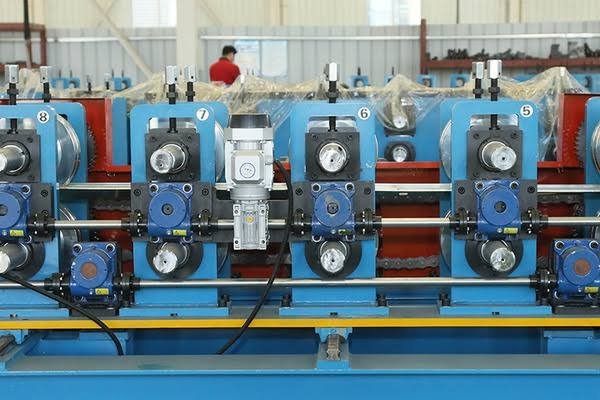
Manufacturing accuracy is essential in modern steel construction because even minor dimensional errors can affect the strength, alignment, and performance of structural components. Steel purlins are widely used in industrial buildings, warehouses, factories, agricultural structures, and commercial construction projects. Producing these components with consistent dimensions and precise shapes requires advanced machinery and effective production methods. A CZ purlin roll forming machine provides an efficient solution by transforming metal coils into accurately shaped C and Z purlins through a continuous forming process.
As construction standards continue to improve, manufacturers must focus on reducing production errors, maintaining consistent quality, and increasing operational efficiency. Understanding how to operate and maintain roll forming equipment correctly can help businesses achieve better manufacturing accuracy and deliver reliable products to customers.
Understanding the Importance of Manufacturing Accuracy
Manufacturing accuracy refers to the ability to produce components according to specified dimensions, shapes, thicknesses, and tolerances. In steel construction, accurate purlins are particularly important because they support roofing and wall systems while distributing structural loads.
Incorrect measurements can create several problems, including installation difficulties, material waste, structural misalignment, and additional production costs. Even small variations in hole positions, profile dimensions, or cutting lengths can affect the final assembly.
A CZ purlin roll forming machine helps minimize these problems by using controlled forming stations and automated production systems. When properly configured, the equipment can produce consistent profiles while maintaining the required specifications throughout the manufacturing process.
Select the Right Machine Configuration
Choosing suitable equipment is the first step toward improving manufacturing accuracy. Different construction projects require different purlin dimensions, thicknesses, and profile designs. Therefore, manufacturers should select machinery that supports their specific production requirements.
A high-quality CZ purlin roll forming machine should provide adjustable forming stations, reliable drive systems, accurate cutting mechanisms, and stable material feeding. These features help ensure that metal sheets move smoothly through the production line without unnecessary deformation.
Consider Profile Size and Material Thickness
Before purchasing or configuring equipment, manufacturers should identify the required C and Z purlin sizes. The machine must accommodate the intended profile dimensions and material thicknesses.
Using unsuitable machinery can result in inaccurate bends, uneven edges, and inconsistent product dimensions. Selecting equipment with an appropriate adjustment range makes it easier to maintain accuracy across different production orders.
Evaluate Machine Construction
The machine frame should be strong enough to withstand continuous industrial operation. A stable frame reduces unwanted vibration and helps maintain alignment between forming stations.
Manufacturers should also examine the quality of rollers, shafts, bearings, and transmission components. Durable machine construction supports consistent performance and reduces the possibility of mechanical deviations.
Maintain Accurate Material Feeding
Material feeding plays a significant role in the accuracy of the roll forming process. If the metal coil enters the machine unevenly, the resulting purlin may develop dimensional variations, twisting, or incorrect bends.
Proper alignment of the decoiler and feeding equipment helps maintain a consistent material path. Operators should ensure that the coil is positioned correctly and that the sheet enters the first forming station without unnecessary tension or lateral movement.
Use Proper Coil Alignment
The metal strip should remain centered throughout the feeding process. Misalignment can cause uneven forming pressure and create differences between the two sides of the finished profile.
Regularly checking guide rollers, feeding tables, and alignment mechanisms helps prevent these problems. Operators should also inspect incoming metal coils for damaged edges, surface irregularities, and thickness variations.
Control Feeding Speed
Feeding speed should match the machine’s forming capacity. Excessive speed may increase vibration and reduce the consistency of material movement, while an unsuitable operating speed can affect overall productivity.
A controlled feeding process allows each forming station to shape the metal gradually and accurately.
Calibrate the Roll Forming Stations
Roller calibration is one of the most important factors in achieving precise purlin dimensions. Each forming station contributes to the gradual transformation of flat metal into the required C or Z profile.
If rollers are incorrectly positioned, the finished product may have uneven flanges, incorrect web dimensions, or inconsistent angles.
Manufacturers should regularly inspect roller spacing, shaft alignment, and forming pressure. Calibration should follow the machine manufacturer’s recommendations and the required product specifications.
Check Roller Alignment
All rollers should remain properly aligned to ensure balanced pressure across the metal strip. Misaligned rollers can produce twisting, bending irregularities, and unwanted surface marks.
Routine inspections help identify alignment issues before they affect large production batches.
Maintain Consistent Forming Pressure
Forming pressure should be appropriate for the material thickness and strength. Excessive pressure can damage the metal surface or create unwanted deformation, while insufficient pressure may prevent the profile from achieving its intended shape.
A properly adjusted CZ purlin roll forming machine ensures that each forming stage contributes to a uniform final product.
Improve Cutting Length Precision
Accurate cutting is essential for producing purlins that fit construction requirements. Incorrect cutting lengths can create installation challenges, increase material waste, and slow down building projects.
Modern roll forming systems often use automatic cutting mechanisms controlled by programmable systems. These systems allow operators to enter the required product length and maintain consistency during continuous production.
Use Reliable Measuring Systems
Manufacturers should verify that measuring sensors and length-control devices are functioning correctly. Regular testing helps identify measurement deviations and ensures that the cutting system responds accurately to production settings.
Operators should also compare finished products against the specified dimensions to confirm cutting accuracy.
Inspect Cutting Blades
Worn or damaged cutting blades can create rough edges, deformation, and inconsistent cuts. Regular blade inspection and timely replacement help maintain product quality.
Proper blade positioning also reduces unnecessary stress on the machine and improves cutting performance.
Utilize Automation and Digital Controls
Automation has become increasingly important in modern metal fabrication. Advanced control systems allow manufacturers to manage production parameters with greater consistency and reduce the possibility of manual operating errors.
A modern CZ purlin roll forming machine may include programmable logic controllers, touchscreen interfaces, automatic length measurement, and computerized cutting systems.
These technologies allow operators to save production settings, adjust dimensions, and monitor important manufacturing functions.
Reduce Manual Measurement Errors
Manual measurements can vary between operators and production shifts. Automated systems reduce dependence on repeated manual calculations and help maintain consistent production settings.
Operators can enter required dimensions into the control interface and use the stored information for future production orders.
Monitor Production Performance
Digital monitoring helps operators identify unexpected changes in machine speed, material movement, and cutting performance.
Early detection of unusual operating conditions makes it possible to correct problems before they affect an entire production batch.
Implement Regular Quality Inspections
Quality inspections should take place throughout the manufacturing process rather than only after production is completed. Continuous inspection helps manufacturers identify defects early and maintain consistent product standards.
Important inspection points include web width, flange dimensions, lip measurements, profile angles, cutting lengths, and hole positions where applicable.
Establish Standard Inspection Procedures
Manufacturers should develop clear inspection guidelines for every product type. These guidelines should specify acceptable dimensions, measurement methods, and quality requirements.
Using calibrated measuring instruments helps ensure reliable inspection results.
Test Finished Purlins
Finished C and Z purlins should be checked for dimensional consistency, surface damage, twisting, and visible deformation.
Comparing samples from different production stages can reveal whether the machine is maintaining accuracy throughout the manufacturing process.
Follow a Preventive Maintenance Schedule
Machine maintenance directly affects manufacturing accuracy. Components exposed to continuous movement and pressure may gradually experience wear, looseness, or misalignment.
Without regular maintenance, these problems can affect forming quality and increase unexpected downtime.
Manufacturers should establish a preventive maintenance schedule that includes lubrication, cleaning, roller inspection, bearing checks, and electrical system testing.
Inspect Mechanical Components
Rollers, shafts, gears, chains, and bearings should be inspected regularly. Loose connections and worn components should be repaired or replaced before they cause serious production problems.
Keep the Machine Clean
Metal particles, dust, and other debris can interfere with machine movement and affect material feeding. Keeping the equipment clean helps maintain smooth operation and reduces unnecessary wear.
Train Operators for Better Production Results
Even advanced machinery requires skilled operators. Proper training helps employees understand machine settings, material requirements, calibration procedures, and quality inspection methods.
Operators should know how to identify common defects, recognize unusual machine behavior, and make adjustments according to approved operating procedures.
Training should also cover workplace safety, emergency shutdown procedures, and routine maintenance responsibilities.
An experienced operator can identify minor production irregularities before they develop into costly manufacturing problems.
Choose Quality Raw Materials
The quality of raw materials has a direct influence on the accuracy of finished purlins. Variations in metal thickness, hardness, coating, and surface condition can affect the forming process.
Manufacturers should purchase steel coils from reliable suppliers and verify that incoming materials meet the required specifications.
Consistent raw material quality makes it easier for a CZ purlin roll forming machine to maintain uniform forming pressure and produce accurate profiles.
Conclusion
Improving manufacturing accuracy requires a combination of suitable machinery, precise calibration, consistent material feeding, automation, skilled operators, and regular maintenance. Every stage of the roll forming process contributes to the quality and dimensional consistency of finished steel purlins.
A well-maintained CZ purlin roll forming machine enables manufacturers to produce accurate C and Z profiles while reducing material waste, minimizing production errors, and improving operational efficiency. By investing in reliable equipment and implementing effective quality control procedures, businesses can strengthen their manufacturing capabilities and meet the growing demands of modern steel construction.