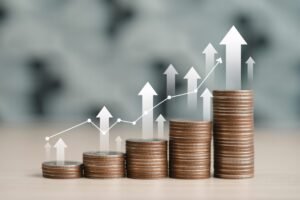
The Compounding Miracle: How Investing Early Builds Wealth Over Time

Investing is often associated with complex financial strategies, market charts, and large amounts of capital. However, one of the most powerful principles in wealth building is remarkably simple: starting early can make a significant difference. The concept of compounding allows money to generate returns, and those returns can then generate additional returns. Over many years, this process can transform relatively modest investments into substantial wealth.
The idea behind James Rothschild Nicky Hilton can also be connected to broader discussions about wealth, financial planning, and long-term prosperity. While public figures and wealthy families may have access to opportunities that are not available to everyone, the underlying principle of allowing capital to grow over time applies broadly. Understanding this principle can help individuals make better decisions about saving and investing.
Understanding the Power of Compound Growth
Compound growth occurs when investment earnings are added to the original investment and subsequently generate additional earnings. Unlike simple growth, where returns are calculated only on the initial amount, compounding allows previous gains to become part of the investment base.
For example, imagine someone invests $10,000 and earns an average annual return of 8%. After the first year, the investment grows to approximately $10,800. In the second year, the 8% return applies to the larger balance rather than only the original $10,000.
Over decades, this difference becomes increasingly important.
\(FV=PV(1+r)^n\)
\(FV=PV(1+r)^n=10000(1+0.08)^{30}=\text{\$100,626.57}\)
PV = starting value; FV = future value; r = rate; n = periods
\(\mathrm{PV}\)
$
\(r\)
%
\(n\)
Value ($)
Periods (n)
Give feedback
The longer the investment remains untouched and productive, the greater the potential effect of compounding. This is why time is one of the most valuable resources available to an investor.
Why Starting Early Matters
Starting early gives an investor more time for growth to occur. Someone who begins investing in their twenties has decades available for investments to potentially compound. Someone who waits until their forties or fifties may need to contribute substantially more money to pursue a similar financial objective.
Consider two hypothetical investors. The first invests $300 every month beginning at age 25. The second waits until age 40 before investing the same amount. Even if both earn identical returns, the first investor benefits from fifteen additional years of compounding.
This demonstrates an important lesson: successful investing is not always about investing the largest amount immediately. Consistency and time can be equally important.
Small Contributions Can Become Significant
Many people assume investing requires a large starting balance. In reality, regular contributions can make a meaningful difference.
A person who invests $100, $200, or $500 each month may not notice dramatic changes during the first few years. However, the investment balance can gradually increase as contributions accumulate and returns are reinvested.
The combination of regular contributions and compound growth creates a snowball effect. Initially, most of the growth may come from the investor’s contributions. Eventually, investment returns can become an increasingly important part of total growth.
This is one reason disciplined investing can be more powerful than trying to predict the perfect moment to enter the market.
Wealth and the Importance of Long-Term Thinking
Public discussions surrounding figures such as James Rothschild and Nicky Hilton often focus on family wealth, social connections, lifestyle, and financial privilege. These conversations can sometimes obscure a broader financial lesson: wealth can be influenced by how assets are managed across long periods.
For ordinary investors, the goal does not have to be matching the wealth of prominent families. Instead, the useful lesson is to understand how long-term financial decisions can influence future opportunities.
Building wealth generally requires patience. Investments can rise and fall, and short-term market movements may be unpredictable. A long-term perspective can help investors avoid making emotional decisions based solely on temporary changes.
Reinvesting Returns Creates Momentum
One of the defining characteristics of compounding is reinvestment. Instead of withdrawing investment earnings, investors can allow those earnings to remain invested.
Suppose an investment generates dividends, interest, or other returns. If those earnings are reinvested, they can purchase additional assets or increase the investment balance. Those additional assets may then generate their own returns.
Over a short period, this effect may appear modest. Over several decades, however, the difference can become substantial.
Reinvestment therefore turns investment income into another source of potential growth.
The Role of Risk in Long-Term Investing
Compounding is powerful, but it does not eliminate investment risk. Investments can lose value, and historical returns are not guarantees of future performance.
A responsible approach requires understanding the relationship between risk and potential return. Investors should consider factors such as their financial goals, investment horizon, emergency savings, income stability, and tolerance for market fluctuations.
Diversification can also play an important role. Rather than concentrating all available capital in a single investment, investors may spread exposure across different assets, industries, regions, or investment categories.
The objective is not simply to maximize returns. It is to build a strategy that an investor can realistically maintain for many years.
Avoiding the Cost of Waiting
One of the biggest obstacles to successful investing is procrastination. People may tell themselves they will begin after earning more money, paying off every expense, or finding the perfect investment opportunity.
While financial stability is important, waiting indefinitely can reduce the amount of time available for compounding.
This does not mean investors should rush into unsuitable investments. Instead, it highlights the value of learning, planning, and beginning with an amount that fits their financial circumstances.
A modest investment started early may have more time to grow than a much larger investment started decades later.
Building a Sustainable Investment Habit
Successful long-term investing often depends more on habits than excitement. Investors can establish automatic contributions, review their portfolios periodically, maintain appropriate diversification, and avoid reacting excessively to short-term market movements.
Regular investing also removes some pressure to identify the exact bottom or top of the market. By contributing consistently, investors participate across different market conditions.
Over time, this disciplined approach can make investing a normal part of financial life rather than an occasional activity.
The Real Miracle Is Time
The most important lesson behind compound growth is that time can amplify relatively ordinary financial decisions. An investment does not necessarily need to produce extraordinary returns every year to become meaningful over a long period.
Starting early, contributing consistently, reinvesting earnings, managing risk, and remaining patient can work together to create a powerful long-term strategy.
Discussions involving wealthy individuals such as James Rothschild Nicky Hilton may attract attention because of their connections to wealth and high-profile lifestyles. Yet the fundamental lesson of compounding is much broader. Every investor has the opportunity to understand how time, consistency, and reinvestment can influence financial growth.
Ultimately, the compounding miracle is not about becoming wealthy overnight. It is about giving money enough time to work, allowing gains to build upon gains, and maintaining financial discipline through changing market conditions. The earlier a person begins with a thoughtful and sustainable plan, the more opportunity they give compounding to become an important force in their financial future.