QSFP28 Cables Explained: Key Features and Benefits for Modern Networks
Modern data centers and enterprise networks demand high-speed, reliable connectivity to support massive data transfers and low-latency applications. One of the key components enabling this performance is the QSFP28 cable, a high-density, high-speed transceiver solution designed for next-generation network infrastructures. Understanding its features, types, and benefits can help businesses make informed decisions when designing or upgrading their networks.
What is a QSFP28 Cable?
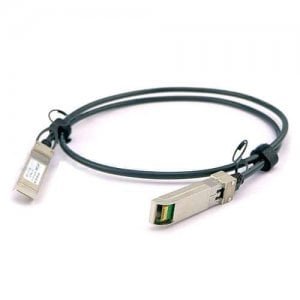
The QSFP28 cable is a type of Quad Small Form-factor Pluggable (QSFP) transceiver that supports 100 Gigabit Ethernet (100GbE) data rates. It is an evolution of the QSFP+ standard, capable of delivering four lanes of 25Gbps each, resulting in a total of 100Gbps throughput. These cables are primarily used in data centers, high-performance computing (HPC) environments, and enterprise network backbones, where bandwidth demand is continuously increasing.
QSFP28 cables are available in both direct attach copper (DAC) and optical formats, allowing for flexible deployment based on distance requirements and budget considerations. Fiber-mart, a leading provider of high-quality networking solutions, offers a wide selection of QSFP28 cables suitable for different network environments.
Types of QSFP28 Cables
Direct Attach Copper (DAC) QSFP28 Cables
DAC QSFP28 cables are designed for short-distance connections within racks or between adjacent racks. These cables are available in passive and active variants:
- Passive DAC: These cables are cost-effective and ideal for short links up to 5 meters. They do not require additional power for signal transmission, making them energy-efficient.
- Active DAC: Equipped with signal conditioning electronics, active DAC cables can support longer distances up to 10 meters or more. They are suitable for environments where higher reliability is required.
Fiber-mart provides DAC QSFP28 cables with sturdy construction and reliable signal integrity, ensuring optimal performance in data center setups.
Optical QSFP28 Cables
Optical QSFP28 cables are ideal for long-distance connections and high-bandwidth applications. They typically use fiber optics to transmit data, which reduces signal loss and electromagnetic interference. There are several types of optical QSFP28 cables:
- SR (Short Range): Uses multimode fiber for distances up to 100 meters. It is commonly used for intra-rack or adjacent rack connections.
- LR (Long Range): Designed for single-mode fiber connections, supporting distances up to 10 kilometers. This type is suitable for connecting data centers or network buildings within a campus.
- ER (Extended Range) and ZR (Ultra Long Range): Supports distances up to 40 km and beyond, making them ideal for large-scale enterprise or service provider networks.
Fiber-mart offers high-performance optical QSFP28 cables compatible with various transceivers, ensuring seamless integration into existing infrastructures.
Key Features of QSFP28 Cables
High-Speed Data Transmission
The most significant advantage of the QSFP28 cable is its ability to deliver 100Gbps speeds. This high throughput is crucial for modern applications like cloud computing, AI processing, and large-scale virtualization. By leveraging four 25Gbps lanes, QSFP28 cables ensure stable and reliable data transmission even under heavy network loads.
Hot-Pluggable Design
QSFP28 transceivers are hot-pluggable, which means they can be inserted or removed without powering down the network device. This feature simplifies network maintenance and reduces downtime, which is particularly valuable in large data center environments where uptime is critical.
Energy Efficiency
Compared to other high-speed interconnect solutions, QSFP28 cables are energy-efficient. Passive DAC cables require no additional power, while active cables and optical modules are designed to minimize power consumption. Fiber-mart QSFP28 solutions are built with energy efficiency in mind, helping reduce operational costs in large-scale deployments.
High Density and Scalability
QSFP28 cables are compact and allow for high-density deployments in network switches, servers, and storage devices. Their small form factor enables data centers to maximize port density, providing room for future expansion without additional hardware investments.
Low Latency
In environments where latency is a critical factor, such as financial trading, HPC, or AI-driven applications, QSFP28 cables offer low-latency performance. The high-speed transmission combined with signal integrity optimizations ensures minimal delay between network nodes.
Benefits of Using QSFP28 Cables in Modern Networks
Enhanced Network Performance
Integrating QSFP28 cables into a network infrastructure improves overall bandwidth capacity and reduces congestion. High-speed connections enable faster data transfers between servers, storage arrays, and network switches, supporting demanding workloads and applications.
Future-Proof Network Architecture
With the rapid growth of data traffic, investing in QSFP28 cables allows organizations to future-proof their networks. As businesses scale, these cables support higher speeds and increased traffic without the need for frequent infrastructure upgrades.
Cost-Effective Solution
Although QSFP28 cables offer high-speed connectivity, they can be cost-effective compared to upgrading to entirely new network architectures. DAC cables, in particular, provide a budget-friendly solution for short-range connections while maintaining excellent performance.
Reliability and Compatibility
Fiber-mart QSFP28 cables are rigorously tested for reliability and compatibility with a wide range of network devices. This ensures consistent performance across different hardware platforms, reducing network downtime and troubleshooting efforts.
Flexibility in Network Design
The availability of different types of QSFP28 cables, including DAC and optical variants, provides flexibility in network design. Short-distance intra-rack connections can utilize cost-effective DAC cables, while long-distance inter-data center links can rely on optical solutions. This adaptability makes QSFP28 cables suitable for both small enterprise networks and large-scale data centers.
Selecting the Right QSFP28 Cable
When choosing a QSFP28 cable, it is essential to consider the following factors:
- Distance Requirements: For short-range connections, DAC cables are ideal, while optical cables are better for longer distances.
- Data Rate: Ensure that the cable supports the required data rate (typically 100Gbps) for your network applications.
- Network Equipment Compatibility: Verify that the QSFP28 cable is compatible with your switches, servers, and transceivers. Fiber-mart provides comprehensive compatibility information for their cables.
- Environment: Consider factors such as heat, electromagnetic interference, and rack density to select the appropriate cable type.
By evaluating these factors, network administrators can optimize performance and reliability while keeping costs under control.
Conclusion
The QSFP28 cable has become an essential component in modern network infrastructures, offering high-speed data transmission, low latency, and energy-efficient performance. Its versatility, compatibility, and scalability make it an ideal choice for data centers, enterprise networks, and high-performance computing environments. With solutions available from Fiber-mart, organizations can access high-quality QSFP28 cables that meet rigorous standards for reliability and performance. Investing in these cables ensures that networks are prepared for growing data demands while maintaining cost-effective and efficient operations.